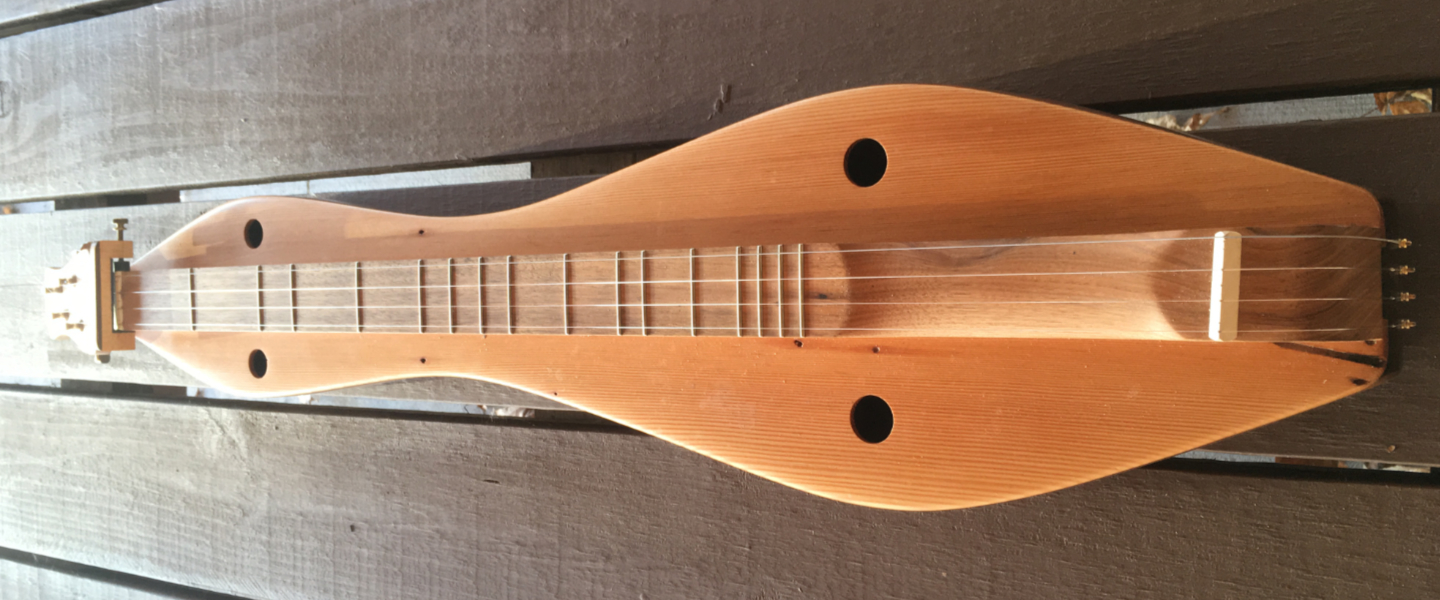
Other Instruments with Diatonic Fretboards

I’m curious about what other dulcimer players and builders think about the whole range of dulcimer-like diatonic instruments that you basically strap on and play underneath like a guitar. There are some interesting new instruments that have gotten on my radar recently:

http://seagullguitars.com/seagull_merlin.html

http://www.folkcraft.com/druid-moon-dulcileles.html

…and of course the well-known McNally Strumsticks, which have been around for a LONG time:

http://www.strumstick.com/

…and then the Olympia Dulcimer Company with their “walkabout” dulcimers (I have a bit of a problem with these very mandolin-like instruments being called dulcimers, but then, I’ve heard they sound great, so what the hey?):

http://walkaboutdulcimer.com/

Speaking for myself, since I still play the guitar, mandolin, and uke, I generally go to them for a play-underneath experience, though I ‘m not so sure I like the idea of having missing frets! I think I’m so used to the full chromatic range of fretting on these instruments. Everyone is different though, and these kinds of preferences are what makes life interesting.

What do you think about these “play-under” diatonic instruments? Do you think guitar players would be more likely to play one of these than learn the dulcimer in the traditional over-the-top lap style….if they were looking for something unique and folky?

Hexatonic Scale with Em and D Triads

I found a very interesting way to build a hexatonic (or 6-tone) scale using just two adjacent triads, with no overlapping notes or common tones. Here is the diagram of the six tones from low to high, and a diagram showing how the two triads are complementary and how they are interlocked:

Diagram of D and Em Triads complementing each other to form a hexatonic scale

The dulcimer TAB below the notes is for DAD tuning, and the important thing here is to see the 7 – 5 – 4 of the D, and then the 8 – 6 – 5 of the Em. Each triad adds three essential ingredients to the hexatonic scale: there is no overlap. I’ve been using this scale referenced to Em as the tonic chord, so we have: the notes E (Root) – F# (2) – G (b3) – A (4) – B (5) – D (b7).

So for the great round Hey, Ho, Nobody Home–which does an endless cycle of Em / D / –this scale works wonders going consecutively down or up, and in many patterns that can be sequenced over the repeating chords.

Just Starting Work Here

I’m just getting started now with a mountain dulcimer oriented blog After some research and reading of some other blogs (as well as reading the excellent WordPress the missing manual, by Matthew MacDonald, I have decided to make a kind of “blog-in-progress” and let the structure and categories gradually sort themselves out.

We’ll see what happens with this. In the meantime, you may want to check out my main web site:

http://www.jcrmusic.com

As time goes on, I’ll try to share lots of stuff about mountain dulcimers and dulcimer music with you. Thanks for reading!

Jerry