New Single Releases on Spotify!

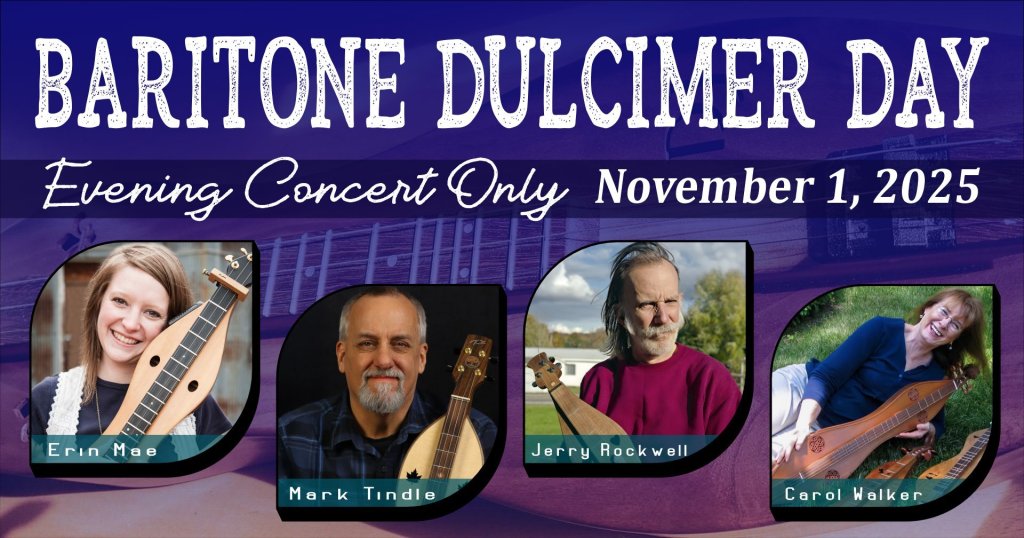
I’m really stoked to be part of this 4th Annual Baritone Dulcimer Day! This is a virtual event on Zoom, so no matter where you are, you will be able to participate. DJ Hamouris has done a great job of organizing this unique event so that all of us instructors can learn from each other’s workshops, and we can see each other’s concerts. How cool is THAT???
This EP is partly a retrospective, with three tracks going back to 2019 and 2020 (Canterbury Lullaby, Jenny’s New Dreamscape, and The Light Always Comes), and two fairly recent tracks from earlier this year (Allison’s Infinite Round I, and Firefly Duet).
The three earlier tracks were remixed and remastered, and this took a lot more time than any other production in recent memory. I have taken advantage of the new mastering assistant in my Logic Pro Digital Audio Workstation, and I have made some progress in my audio engineering – particularly with getting levels balanced and consistent.
Most of these tunes have two or three tracks of electric dulcimer, with some standard DAD tuning, and some baritone AEAA tuning (Allison’s Infinite Round is tuned a whole step up to B-F#-B-B).
https://jerryrockwell.bandcamp.com/album/canterbury-lullaby-ep
I’ve been very busy in the last three or four months with producing these tracks in my home studio. I don’t remember a time in the past where I was so dedicated to getting a collection of tunes out, and getting everything sounding right.
I went into 2025 with a surge of interest in recording my own handcrafted dulcimers acoustically, using just a decent quality condenser mic. Much of my recording over the past decade has been with magnetic humbucking pickups — usually placed over the strings with device that hold the pickups securely. These pickups do a great job of amplifying the dulcimer, and they work incredibly well with the immersive and ambient reverb plug-ins I use with Logic Pro software. The downside is that they make the dulcimer sound VERY similar to an electric guitar.
Two tracks on this new EP that use mostly just acoustic dulcimer and acoustic guitar are the opening track “Allison’s Infinite Round I” and track 5 “Safe Passage Round II.” I think you will hear a difference in these tracks: to me, I notice the increased dynamic range of the dulcimer and acoustic guitar. There is also a fragility or delicacy in the tone, though there is also a certain kind of acoustical power that really kicks, particularly on the high-end.
https://jerryrockwell.bandcamp.com/album/safe-passage-to-green-fields

This is a study I recorded with two overdubbed baritone dulcimer parts. The slightly left-panned part is the low ground bass, and the right-panned part is much higher in pitch. I tried for contrary motion in much of my playing in this higher part, though there are some passages of thirds and sixths in parallel motion as well.
This study is based on what I like to call the “Axis Chords” – it is one of my favorite 4-chord loops:
A – E – F#m – D
Enjoy listening and jamming along!!
Here is a recent solo I recorded on my baritone dulcimer in AEAA tuning. This is very similar to the tablature I gave for B Aeolian in the last post, except for the fact that it is a 4th lower in F# Aeolian, and the last chord in the last measure is a G chord. In the F# version here, that same chord would be D.
And here is another take at a quicker pace:
In keeping with the harmonization of descending scales and modes that I started last post, here are two ways to harmonize the B Aeolian Mode (AKA Natural Minor Scale), with the mode in the upper voice on the melody string (instead of on the bass string like the D Major example last time):

Over the past 10 or 15 years, I have put a lot of time and effort into harmonizing major scales and modes on the dulcimer. This has been time well-spent for me: I can’t begin to tell you how many good ideas I’ve gotten for new tunes, or how fluent my improvisation has become by consistent practice with this.
Now, you might ask: “Why descending scales and not ascending scales?” To answer this, consider the notion that ascending musical scales, or chords, tend to build tension and suspense. When you are starting out on lower pitches and gradually ascending to higher and higher pitches, it makes sense that you are going to feel more anticipation and a build of drama. With descending scales, the opposite is mostly true: You start with a high note or chord, and then gradually descend, releasing tension with each chord change. That’s why I find the descending harmonized scales so soothing and relaxing.
Here is the D Major Scale starting on fret 7 and descending down the fingerboard on the bass string. It is harmonized (on the middle and melody strings) with mostly just the primary triads of I, IV, and V (D, G, and A), but I have added an E minor towards the end for a bit of color. The arpeggios below are just a suggestion, and there are many different ways of ordering the notes in a particular chord shape. If you add some eighth notes to the action, there will be a lot more movement, and if you let some notes ring out for two full beats or more, this can add to the variety. Also, try 4/4 and holding each chord for two measures.

It has certainly been many moons since I released anything on bandcamp, but I’ve been working diligently on some more meditative dulcimer instrumentals, and I have a 4-tune EP ready now……just in time for “Bandcamp Fridays” (where the platform forgoes their share of revenue on the first Friday of most months).
These are some tracks that took more time for me to get exactly the right production, and I’m learning a lot about audio engineering with each track.
“Kate’s Waltz” is a 3/4 time version of my original “Kate’s Tune” which first appeared on my Singing Messenger album, way back in 2016. It is based on a mixolydian chord progression which was generated by a harmonized descending mixolydian mode. I have used this for many other titles, including “Blue Ridge Dream” (also in 3/4), “November’s Waltz” (from the early years of my Patreon lessons), and also the last track on this EP “Continuous Lines 218.”
“Magic Mountain Sanctuary” is a continuation of my “Magic Mountain Solitude” tracks, and I’m tuned a half step up from my usual DAD tuning – to Eb – Bb – Eb. The chords are a stretched out version of the “cabbage chords” (well-known to many dulcimer players!), and there is an arpeggiated keyboard track in the background to set the groove.
The title track “Twilight At East Beach” is inspired by a beautiful beach on Lake Erie, in Lorain, Ohio, not too far from Cleveland. This one is actually in the key of F and uses an 8-bar progression I constructed from joining two 4-chord loops. These days, I usually play in the key of F by tuning CGC and keying off of the F chord as the center, but not using a capo. This track has a few synth pads to create a backdrop for the very high-pitched dulcimer melodies.
Anyway, here you go if you want to check it out. Thanks for listening!
There are two absolutely delightful additions to what everyone can do at Patreon, and I’m so glad that they went through with these changes!
First of all, they are welcoming the public much more warmly than before with their “free member” program. Now, anyone can interact with my public posts without joining or subscribing to my monthly lessons!! Some folks have said on various forums that this is no big deal, because someone from the public could always interact with posts that creators designated as “public.” So these people are saying that Patreon just changed their terminology a little bit.
I think it is a big deal, because now I’m seeing an increasing number of free members (I get a notice every time a free member joins), and this encourages me to post more public or “free” content! I’ve made a few videos of my relaxing tunes public recently, and I will be making more of my tablature and music pdf files open to the public as well. Likewise for the mp3 audio that comes directly from my home studio.
The second feature I LOVE is that I can now sell digital downloads from my catalog of eBooks right on Patreon, without setting up an e-commerce function on my web site! You can find my Shop tab right below my name and the short tagline that describes what I’m doing at Patreon when you go to this link:
Jerry Rockwell Teaches Dulcimer at Patreon
Hope to see you there!!

I have a brand new 7-track album of meditative instrumentals on my dulcimer, available at bandcamp. This collection is focused mostly on my baritone dulcimer (tuned AEAA in 4-string equidistant spacing). Some of the selections are out here on bandcamp before their official release dates: Mystic Light Meditation, and Lullaby for Kate.
Along with the extra warmth and richness of the acoustic/electric baritone, these are more ambient and immersive productions than most of my recent output. They should be great for meditation, yoga, daydreaming, or just getting some restful sleep.

I have learned SO MUCH from harmonizing the descending form of the major scale, the aeolian mode, the dorian mode, and the mixolydian mode. In the DAD tuning, I start with the D Major Scale up at the 7th fret of the bass string, and move down the fingerboard to 6+, then 5–4–3–2–1–0. The basic idea is to build a chord on each bass note, using mostly the primary triads (D, G, and A or I, IV, and V). I usually like to put Em in place of the G the second time around. to give things a touch of color and to add a little variety.
Here is a 2-page pdf in waltz time with two measures on each chord. The first 16 bars of each exercise has block position chords, and the arpeggios follow below. You can make up your own arpeggios for this as well: be creative!! .
You must be logged in to post a comment.