Tag: Jerry Rockwell
Monthly Dulcimer Lessons at Patreon!
I’m so jazzed up about this I can barely contain myself: I’m now in the second month of lessons on my Patreon Page:
Jerry Rockwell Teaches Dulcimer at Patreon
For as little as $1 per month, you can join in all the fun and the jams and the rounds, PLUS you get access to my newsfeed where I am in the process of distributing exclusive free downloads!!!
A Christmas Medley from 2012
Annual SouthEast Ohio Dulcimer Family Reunion

Building Some Dulcimers Again
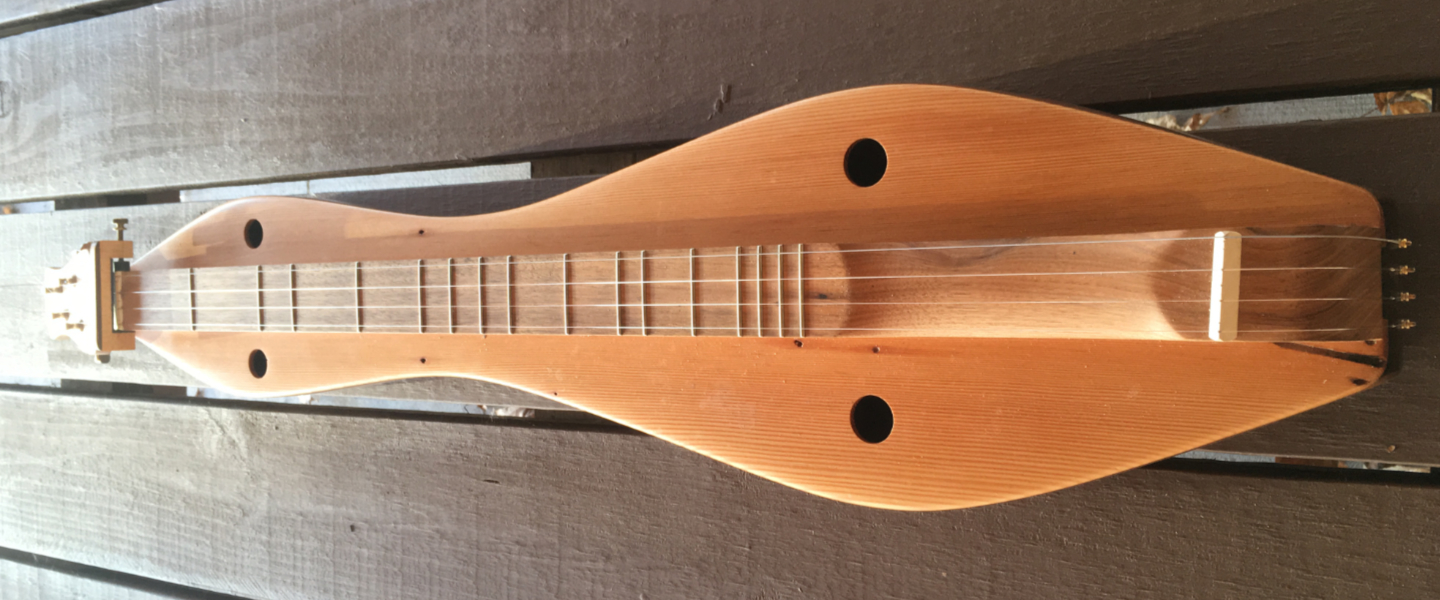
Due to some extreme family pressures, it has been next to impossible to get any of my handmade dulcimers built. Now that seems so be changing some, in that I have a few instruments on hand, and I’m hoping I can continue in this rhythm for at least the next two or three months. Let me know if there is something you are interested in or if you’d like some pricing info — email is jcrockwell – the “at sign” – gmail.com (you know the deal- no spaces: everything run together)

The Jam-A-Round in E minor (hexatonic)
Two Variations on Twinkle, Twinkle, Little Star
This time we’ll have a go at some variations on Twinkle, Twinkle, Little Star. I’ve been improvising over this one for decades, and it’s always fun. When you’re doing variations on a well-known folk melody like this, the process is a little “tighter” than improvisation: you are working with some of the main pitches that the original melody has, but you are connecting them with passing tones, sometimes moving them around a bit in the measure, and sometimes going up or down a 3rd (two frets on the dulcimer) for a bit of harmonic color.
Before we get to the two full variations on the pdf, I’d like to show you a little bit of the process I use — with just the first two measures in TAB on the melody string (tuning DAD):
original:
0—-0—-4—-4—-|5—-5—-4———|
one possible variation:
0—-2—-4—-4—-|5—-7—-4———|
or another:
0—-2-3-4—-7—-|5—-7—-4—-7—-|
So it’s not really that hard: you just keep some of the main notes in place where they should be and throw in a few different ones of your own choosing—connect a few notes of the original with eighth-note connectors. Try it!! The sky’s the limit, really…..see what you can come up with!
Here are my two 12-bar variations in music and TAB, with a blank second page so you can continue on your own. Try playing this as slow and dreamy as you can:
On the way to Cranberry!
Mary and I are about to sample the splendor of at least two of the Finger Lakes near Penn Yan in upstate New York. Tomorrow we will arrive in Latham, NY for the 39th Cranberry Dulcimer and Autoharp Gathering. I will be teaching three workshops and also doing a featured concert set on Saturday night. If you are in the area, please check it out: it is a great festival with a long and wonderful history, and this year there are so many great workshop leaders:
E minor Hexatonic Jam-A-Round
I think this 6-tone or hexatonic Em – D Jam-A-Round is the most fun of all so far!! The Jam-A-Round idea is very simple: over a repeating chord progression, often using a descending scale, we just plug in parts where the 8-bar progressions begin. You never know how parts interact until you try, so if you have a playing partner with another dulcimer, you are in for a fun time! With a room full of dulcimers and a little imagination, there could be some amazing music!!
This EminorJAR1 is the first melodic sketch around these chords:
Em / / / | D / / / | Em / / / | D / / / | Em / / / | D / / / | Em / Bm / | Em / / / :||
There are basically three parts here: part one is measure 1 – 8, part two is measure 9 – 16, and part three is measure 17 – 24. If you do it as a traditional round, you can play all 24 bars as written, with 2nd and 3rd players coming in on measures 9 and 17. The most fun, though, is where you assign one player to part one, one player to part two, and one to part three. With a little playful messing around, each part can vary according to each players’ ability and imagination. It certainly doesn’t hurt to have one or two of these parts just repeating without variation, because this will act as a great anchor for the more daring improvisers!
Measure 24 is an incomplete measure: I have beat 4 wide open for you, in case you want to put in those high B or E pickup notes into variations of part three from measures 17 through 24. Have FUN!!!
The Dulcimer Capo and How It Works
Dulcimer capos are interesting devices, because they work very closely with the modal nature of the mountain dulcimer’s mostly diatonic fretboard. I had an GREAT question from one of my email newsletter subscribers recently:
“I am intrigued by the notion of using a capo on my dulcimer as you mention in your recent post. As far as I can make out, this enables you to achieve the melody scale for Dorian mode without retuning? Isn’t that the tuning for Shady Grove and Pretty Polly? Is there any other advantage to using a capo? Since by using it you are raising the entire instrument by one whole step, that gives Eminor. I’ll have to try it.”
Here is my response:
It seems to me from the depth of your questions that you truly “get it” with the capo on a dulcimer: when you are tuned DAD, you are in D Major open in (also known as D Ionian, but I’m talking about the mode across the fingerboard and NOT the DAA tuning!). If you put the capo on 1, this shifts everything up a whole step to an EBE dronal environment, and the dulcimer frets — particularly across the fingerboard — give you E dorian.
On the piano keyboard, if you play a D Major scale in the right hand and put a DAD drone in the left, you have the Ionian or major…… if you then play up the D Major scale from E to E, and put an EBE drone in your left hand, you will have an E Dorian environment on the piano analogous to what happens with the capo on the dulcimer!
Now think about what a guitar capo does. If it doesn’t create a massive migraine headache for you, you’ll notice that the chromatic frets of the guitar do NOT suggest any modal environment when you put the capo two frets up (a whole step for the guitar). Sometimes I think of the diatonic fretting as a FILTER.
The other main advantage of the capo (in a tuning like DAD), for me, is the fact that chords indigenous to the mode are everywhere, and ALL notes fit the mode!!! When you go into one of the traditional modal tunings for the dulcimer — like DAC “Aeolian” or DAG “Dorian” — your pure mode notes are to be found mostly on the melody string. The other two strings contain MANY notes borrowed from other modes. This makes it hard to do pure modal chord progressions like the ones I feature all the time.
If you have any thoughts or questions on the topic of dulcimer capos, let me hear from you:


Jerry Rockwell Mountain Dulcimer Newsletter 4/1/15
One Life 4/4 Study
Here is a great chord progression I’ve been working with for almost a decade:
Bm / / / | / / / / |D / / / | / / / / |G / / / |D / / / |A / / / | / / / / :||
I call it the “One Life” progression, but you can call it Fred or Marjorie if you want!! It is one of those extremely hypnotic, mesmerizing progressions that I can play all day and never get bored.
Over the course of time, I have written many different sorts of melodies to go with the One Life progression: waltzes, hornpipes, shuffles, bluesy jams, jigs, and more. This one, though, is a short quasi-classical study which has an upper melody part (which we’ll have this time), and a lower bass part (which we’ll probably get to soon).
Here is the music and TAB for the upper melody:
If you play a little keyboard, try the melody part and see what happens (even I can play this one, and my keyboard chops are very minimal). On your dulcimer, you might try filling in the bare-bones single-string melody with a chord tone here and there–that’s why I put the chord symbols on top! Have fun with it and let me know how it works for you, OK?
The Challenge From 2 Weeks Ago
Here’s the challenge from the last newsletter: take this same progression (the Cabbage Chords) (you can put it in 4/4 time if you want), and try ascending bass lines. Did you have a chance to try this?
Happy Pickin’ – Spring is J U S T a b o u t H E R E !
Jerry
A Country Waltz Project
Here are a few 32-bar arrangements of a little country waltz I wrote in the last week. The first one is in D out of DAD tuning, and the second one is in G, while still in DAD (with no capo). These are both bare-bones arrangements, though the one in D has more fills added on the TAB, but not in the music itself. The one in G is really bare-bones, allowing you to use your imagination with what you might add.
Enjoy these!
You must be logged in to post a comment.